


05
Mukden Palace
The Mukden Palace, built in 1625 by Nurhaci—the founding emperor of the Qing dynasty—was the cradle of early Manchu imperial rule. For nearly two decades, it served as the residence of the first three Qing emperors, before the capital moved to Beijing.
Located in Shenyang, in China’s northeast, the palace blends traditional Han architecture with distinct Manchu and Tibetan elements—echoes of a rising empire at the edge of dynastic change.
06
Fuling Mausoleum
Fuling Tomb, also known as the East Mausoleum, is the resting place of Nurhaci, founding ruler of the Later Jin (later honored as the first emperor of the Qing dynasty), and his wife, Empress Xiaocigao.
Set in the quiet hills outside Shenyang, the tomb became a sacred site for imperial rituals throughout the Qing dynasty.
In 2004, it was inscribed as a UNESCO World Heritage Site, recognized for its historical and cultural significance as the spiritual origin of a dynasty.

07
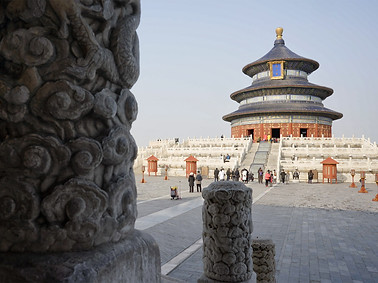
Temple of Heaven
The Temple of Heaven is an imperial architectural masterpiece in southeastern Beijing, once reserved for the Emperors of the Ming and Qing dynasties. Here, they held solemn annual rites, offering prayers to Heaven for bountiful harvests.
Designated a UNESCO World Heritage Site in 1998, the complex is celebrated as “a masterpiece of architecture and landscape design,” embodying a cosmic order central to the worldview of one of the world’s great civilizations.